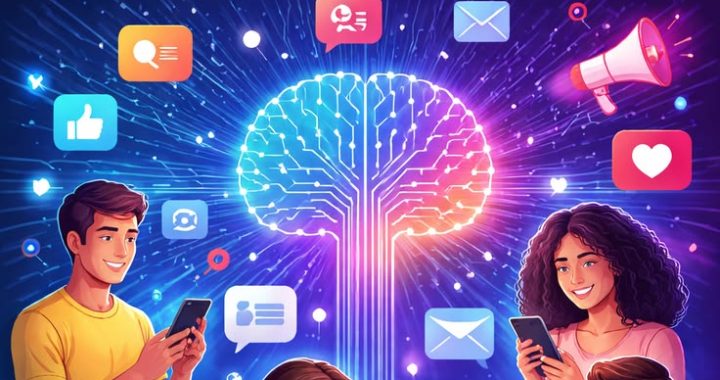
Artificial Intelligence (AI) is rapidly changing the way people communicate in the digital world. From instant messaging and customer support to virtual assistants and AI-powered chatbots, AI has become an essential part of modern communication. It helps individuals and businesses connect more efficiently by providing faster responses, personalized interactions, and round-the-clock support.
In today’s fast-paced environment, people expect quick and accurate information. Smart messaging and virtual assistants are redefining expectations by transforming complex queries into immediate, actionable answers. These technologies are revolutionizing communication by not only increasing speed but also dissolving language barriers through real-time translation.
As AI continues to evolve, it is transforming the way we share information, interact with businesses, and connect with people around the world.
How AI is Changing the Way We Communicate, Learn, and Experience Customer Service
Artificial Intelligence (AI) has become most influential technologies of the modern era. What once seemed like a futuristic concept is now integrated into our everyday lives. Whether we are sending messages, learning new skills online, shopping on websites, or seeking customer support, AI is working behind the scenes to make these experiences faster and more efficient.
The rapid growth of AI has transformed the way people communicate, learn, and interact with businesses. By analyzing large amounts of data and responding intelligently to user needs, AI helps improve productivity, personalization, and convenience. As organizations continue to adopt AI-driven solutions, its impact on society is expected to grow even further.
AI and Modern Communication
Communication has evolved significantly over the past decade, and AI has played a major role in this transformation. Today, AI-powered tools help people connect instantly regardless of language, location, or time zone.
Most noticeable examples of AI in communication is the rise of smart messaging systems. Social media platforms, email applications, and business communication tools use AI to suggest replies, correct grammar, and prioritize important messages. These features save users time and help improve communication quality.
Key Ways AI Improves Communication
Smart Chatbots
Businesses use AI chatbots to provide instant responses to customer queries. These chatbots can answer frequently asked questions, guide users through websites, and provide support without requiring human intervention. This allows companies to handle a large volume of inquiries efficiently.
Language Translation
People from different countries can communicate more effectively using real-time translation services. This technology supports global business operations, education, and international collaboration.
Voice Assistants
Virtual assistants such as Siri, Alexa, and Google Assistant make communication with technology more natural. Users can perform tasks, ask questions, set reminders, and control smart devices using simple voice commands.
Email Assistance
AI helps draft emails, suggest responses, identify important messages, and improve grammar. Professionals can streamline their communication workflows, significantly boosting efficiency.
Real-Time Transcription
AI can convert spoken conversations into text during meetings, webinars, and online events. This improves accessibility and allows participants to focus on discussions without worrying about taking notes.
These innovations save time, reduce communication barriers, improve collaboration, and enhance productivity across various industries.
How AI is Transforming Learning
Education is one of the sectors experiencing the biggest impact from AI. Traditional learning methods are being enhanced through intelligent systems that adapt to individual learning styles and needs.
Unlike conventional classroom environments where every student follows the same pace, AI enables personalized education experiences. By analyzing performance data, AI can identify strengths and weaknesses and recommend suitable learning materials.
Benefits of AI in Education
Personalized Learning
AI evaluates individual student performance to identify strengths, pinpoint weaknesses, and adapt to their unique learning pace. Based on this information, it recommends customized lessons, exercises, and study plans that help students learn more effectively.
Instant Access to Information
Students can now access information in seconds rather than hours. AI-powered educational platforms can provide quick answers, explanations, and relevant learning resources within seconds.
24/7 Learning Support
AI tutors and virtual assistants offer support at any time. Whether a student studies during the day or late at night, AI tools can provide explanations and guidance whenever needed.
Automated Assessment
Teachers can use AI tools to grade assignments, evaluate quizzes, and analyze student performance.
AI reducing administrative burden, improve valuable time and allows educators to dedicate more energy on teaching.
Interactive Learning Experiences
AI-powered simulations, virtual classrooms, and interactive educational applications make learning more engaging. Students can gain practical experience through virtual environments that improve understanding and retention.
Enhanced Accessibility
AI also supports learners with disabilities by providing speech recognition, text-to-speech conversion, and adaptive learning technologies. This makes education more inclusive and accessible to a wider audience.
As AI continues to develop, educational institutions are finding new ways to improve learning outcomes and student engagement.
AI in Customer Service
Customer service has changed dramatically with the introduction of AI technologies. Businesses are now able to provide faster, more efficient, and highly personalized support while improving customer satisfaction.
AI helps organizations meet these expectations through automation and intelligent assistance.
How AI Enhances Customer Service
AI Chatbots
Chatbots can answer common questions instantly, reducing wait times and improving customer experiences. They can handle thousands of conversations simultaneously, making support more scalable.
Virtual Customer Assistants
AI assistants can guide users through products, services, troubleshooting processes, and purchasing decisions. This helps customers find solutions more quickly.
24/7 Availability
AI removes the limitations of traditional business hours, ensuring that customers receive immediate, reliable support regardless of their time zone or location.
Faster Issue Resolution
AI can quickly analyze customer queries and direct them to the appropriate department or provide immediate solutions. This improves efficiency and reduces frustration.
Personalized Customer Experience
By analyzing customer behavior and preferences, AI can provide personalized recommendations and support. By creating these technologies AI helps connection, driving long-term loyalty and brand advocacy.
Predictive Customer Support
Advanced AI systems can predict customer issues before they occur. By identifying patterns and trends, businesses can proactively resolve problems and enhance customer satisfaction.
Advantages of AI in Communication, Learning, and Customer Service
The growing adoption of AI offers numerous benefits for individuals and organizations alike.
Some major advantages include:
-
Improved efficiency and productivity
-
Faster response times
-
Better customer experiences
-
Personalized learning opportunities
-
Reduced operational costs
-
Enhanced accessibility for users worldwide
-
Greater convenience
-
Improved decision-making through data analysis
-
Increased scalability for businesses
These benefits help organizations deliver better services while enabling users to access information and support more efficiently.
The Future of AI
The future of AI looks incredibly promising. As technology advances, AI systems are expected to become more intelligent, accurate, and capable of understanding human needs.
We can expect:
-
More natural conversations with AI assistants
-
Smarter educational platforms
-
Highly personalized customer experiences
-
Improved language translation capabilities
-
Enhanced automation across industries
-
Better healthcare and business applications
-
More advanced predictive analytics
-
Increased integration with everyday devices